Friday, October 15, 2010

Documenting the great depression


Farm Security Administration-Office of War Information Collection has black-and-white photographs which are the landmark in the history of documentary photography. It shows Americans at work and at home with an emphasis on rural areas or small towns and the adverse effects of the Great Depression, Dust storms and increasing farm mechanization. Some of the most famous images portray people who were displaced from farms and migrated West or to industrial cities in search of work. Two illustrated lists of frequently requested images from the FSA-OWI Collection are "'Migrant Mother' Photographs" and "Photographs of Signs Enforcing Racial Discrimination".


1


Why the project has significant impact on the society?


The project has significant impact on the society because it reminds us what happened during the great depression. It gave us an insight of that historic event and with that we can compare to what happened during the recession in 2007-2009. Also, we saw how people in America discriminates races. This made us more aware about racism. This also made the government establish grounds for discrimination among races.


2

What was the role of Migrant Mother Photograph in the period or great depression and what is it nowadays?


Migrant Mother: BEFORE

It was a representation of poverty that was going on. People from the rural areas suffered a lot from the Great Depression as well from the Dust bowl. It was also preceded by a World War which affected middle range to poor people.


Migrant Mother: NOW

Its role nowadays reminds us that poverty is still happening here maybe not specifically in America but in other parts of the world especially in third-world countries.


Works Cited:

"Dorothea Lange's "Migrant Mother" Photographs in the Farm Security Administration Collection: An Overview” n.d. American Memory. 16 Oct 2010.

“Photographs of Signs Enforcing Racial Discrimination:
Documentation by Farm Security Administration-Office of War Information Photographers” n.d. American Memory. 16 Oct 2010.

Friday, October 8, 2010

Photo Manipulation

Photo Manipulation is an art form in which a photograph is significantly altered or changed from its original state. Photo manipulation has been regularly used to deceive or persuade viewers, or for improved story-telling and self-expression. Photoshopping is a slang term for digital editing the photos. The term was popularized by this software called Adobe Photoshop. It is because the most commonly used by professional photo manipulators. However, there are other programs such as Corel Photopaint, GIMP, paint.net may be used.

Last year, I went to New York and took some great photos. Here, I went to Liberty Island and took a picture of the Statue.

Original Photo

What I wanted to do is to put clouds in it and light the torch. And here is what I came up with. I called it "Liberty torch lit with clouds".

Altered Photo

First, I created another layer and used a photo with clouds that I took here in Toronto. Then I overlayed it to the original picture and set the opacity of the layer to 70%. 
Used photo

Second, to create the flames, I created another layer then used a brush tool with a radius size just enough to fill that torch. I used a darker colour first then slightly going to light colour and tried to concentrate on the base point of the torch. Then I used a smudge tool to try create the flames. Also, after that I used the gaussian blur to make the flames more realistic.

This second picture was taken back when I went to Parliament in Ottawa. It was taken from above the building.

Original Photo

Since I have some images of the Statue of Liberty, I decided to put it on that island. I also put a hot air balloon and a couple of MIG jet fighters just to experiment. And here is what I created and it's called "Liberty in Ottawa".


Altered Photo

First, I opened the original photo and created a layer with it. Then I opened up the Statue of Liberty and deleted it's background by using a magic eraser tool. This tool is very handy because it automatically erases background colours. Although it's not perfect all the time, It is really ideal for beginners. Then I also added some stuff into the picture like a hot air balloon and jet fighters and also used the same magic eraser technique.


Photos Used

Remember this next photo? This was at Wellesley and Sherbourne. I was there when this 6 alarm level fire happened. I took a picture from my phone and this is the original photo.


Original Photo


Altered Photo

In this photo, I tried to exaggerate the fire by using a clone stamp tool to copy the smoke and evenly spreading it out to the upper level of the building. I used brush tool to create the flames adding different levels of colour from orange to yellow and to white then I used the smudge tool to spread the colours. Finally, I used the gaussian blur to try make it realistic.

Next photo is the one I took during winter. It was after a snowfall so everything was full of snow.


Original Photo


Altered Photo

What I did in this photo is I added a "snow storm" effect on it. I made a layer and used fill colour with black. And then I rendered it using the difference clouds option. Also I used the blur technique specifically the motion blur to specify the angle to which the snow are going. I played a bit with it to get what I needed. Basically, it was trual and error to get the desired output that i wanted.

In this last photo, I used the close-up photo of the gorgeous Taylor Swift. I created a thermal look on her and I called it the "Thermal Swift".


Original Photo

Isn't she beautiful?


Altered Photo

First, I changed the Hue/Saturation of the photo. The Hue was set to max and saturation was at levels 30-35. Then I copied this image to a new layer and used Motion blur on it. I also overlayed this layer onto the original photo. Then I used a white fill and overlayed it too. After that I created another overlayed layer and filled it with blue. I created another white fill but this time I used the difference option. The reason I used it is because when you maxed your Hue levels, The picture would have a blue screening therefor when you used a white fill, the image will transform with some kind of red appearance. Then the last step was to duplicate the original photo and place it above the blue fill and set it to darken.

Overall, these photo manipulation that I did was really mediocre. I didn't spend too much time on editing them since I'm just learning on using photoshop. Professionals would use several hours just to make their pieces a really work of art. Although the flames wasn't very realistic, as a beginner in this photo manipulation, I would say it is a pretty decent work.

Wednesday, September 29, 2010

From Robert Fenton's combat photographs to Robert Capa's war photography - Week 5

File:Alexander Gardner.jpgAlexander Gardner was a Scottish immigrant who was hired by fellow photojournalist Mathew Brady. He is best known for his photographs of the American Civil War, the American president Abraham Lincoln and the execution of the conspirators to Lincoln's assasination. He worked as an assistant of Mathew Brady for seven years. However, he left the firm because of Brady's practice of signing employees' pictures. He did not like that so he opened his own gallery in Washington D.C.


His famous photographs were the battle at Antietam. In these pictures, we can see the outcome of the war unlike Roger Fenton's style of photography where you don't see dead bodies lying on the ground. He also covered the Battle of Fredericksburg and Battle of Gettysburg.


Among these photojournalists, He was the only one who followed President Abraham Lincoln life. He was good friends with Allan Pinkerton who was the  head of an intelligence operation that later became Secret service. He became the chief war photographer with Pinkerton's recommendation. He took pictures of the American president Abraham Lincoln during his time.


Later, he also documented Lincoln's funeral and the execution of the conspirators of Lincoln's assasination.

File:Execution Lincoln assassins.jpg

Brady and Gardner
Brady and Gardner both covered the American Civil War. Their style of photography is very much similar. They would take images of the real war. There were dead bodies lying on the ground as the result of the war. The only difference between them is when the Civil war ended Gardner continued to work as a photographer for the government. On the other hand, Mathew Brady’s success declined and eventually made him bankrupt.  After the Civil war, Gardner continued his work and was commissioned to photograph Native Americans. Also, he became the official photographer of the Union Pacific Railroad, and was able to capture the laying down of track for the railroad in Kansas.

Capa and Gardner
Robert Capa and Gardner were both war photographers. Capa’s photography style was different because he took pictures when the war is going on contrary to Gardner’s style where he would take images of war aftermath. Robert Capa wore military uniforms, rode in tanks, jumped out of planes, dodged bullets and marched in the front lines in order to get a shot. He was like the photographer in action. He also covered five conflicts in three different continents unlike Gardner and the others who only did one.

Tuesday, September 28, 2010

Can art be mechanically reproduced?


When something is reproduced for so many times is that art? What's the importance of the mechanical reproducibility of the art? What was the impact on mechanical reproducibility on the society?

It is still considered an art when something is reproduced for so many times. However, it represents something new. The situations into which the product of mechanical reproduction can be brought may not touch the actual work of art, yet the quality of its presence is always depreciated. In other words, reproduction of something like a painting loses its original composition. Generally, It is the loss of the "aura". Aura is like the moment of astonishment seizing the first-time beholder of a work of art. Although it looks like it has a little negative impact on society, this does not diminish it's importance. Mechanical reproducibility proves that our technology is changing. It becomes more advanced everyday that we can actually reproduce something like work of art. It explains what is today and what it was in the past.

Mona Lisa Replicas
Mona Lisa painting reproduced

Is photography art, or contribution to the art? Is it just a tool used by artists?
Photography is also an art. Art photographers know how to use lighting, angles and locations. When this is used, photography comes in a form of art. Most technical photographers don't do this because they just take pictures of just important images. Here are some examples of art photography.


How and why Henry Peach Robinson created Fading Away? What was the reason?

Henry Robinson created "Fading Away" by using a combination of five negatives together to form one picture. The reason for him to create this one is he wanted to show real emotion of despair. The picture tells the sentiment of the whole family to their dying loved one.


Photography has impacted the world of art and influenced some changes in the area of accessibility to art. If mechanical reproduction created revolution, what is happening now with the digitalization? 

Digital photography is revolutionized by mechanical reproduction. It is becoming a more common medium and everyone is almost using either a computer or a digital device. People can now keep their images through a computer or a media device. They can edit or enhance their pictures by using imaging softwares.


References:


Friday, September 24, 2010

Photo Journal - Part 1


1
When photographs first became widely recognized, some of the first images available were of architecture and other works of art. It was so rare that only people of the upper-class could afford it. Even a self-portrait is everyone's wish to have at that time. It was their way to show how wealthy they were. It was a luxury that everyone wishes to have.
Robert Cornelius 1839, 1st self-portrait ever


Architecture 1860s

In modern times, technology is changing very fast and we are introduced with digital cameras. Such cameras produces high resolution digital photos. Most of us could afford a camera now and take self-portraits in an instant. Also, anyone now could take pictures as a hobby or take photography as a profession. In the business world, people take pictures for many reasons They use pictures to advertise, market products and everything. Also, people use photography to capture celebrities and other public figures.


2
Photographers in the past focused mainly on landscapes and art. Mainly because most of them were actually painters. Although painting is still in them, photography was the booming trend at that time. Though we can safely say that in the past, photography was really limited. The cost of setting a photo room and developing the photo was really expensive at that time. Also, it takes a couple of hours for it to produce. In general, it is a very time-consuming job. Professional photographers of today can afford somehow the price of producing and developing very good quality photos. Also, amateur photographers can simply take pictures of whatever they like.

3
Technology on portraits made a huge impact. It decided the use of photography over painting. In early photography, the impact of technology with it was overwhelming. People started to realized that they can now document history with images. The concept of privacy was greatly altered as cameras were used to record most areas of human life. The photograph was considered as the future. It was a brilliant invention of mankind. It was the proof of our existence in this world. As technology changes, the photography world made advancements too. From black and white photos, to coloured ones and to digital photography.


From Painting portrait


To Monochrome portrait


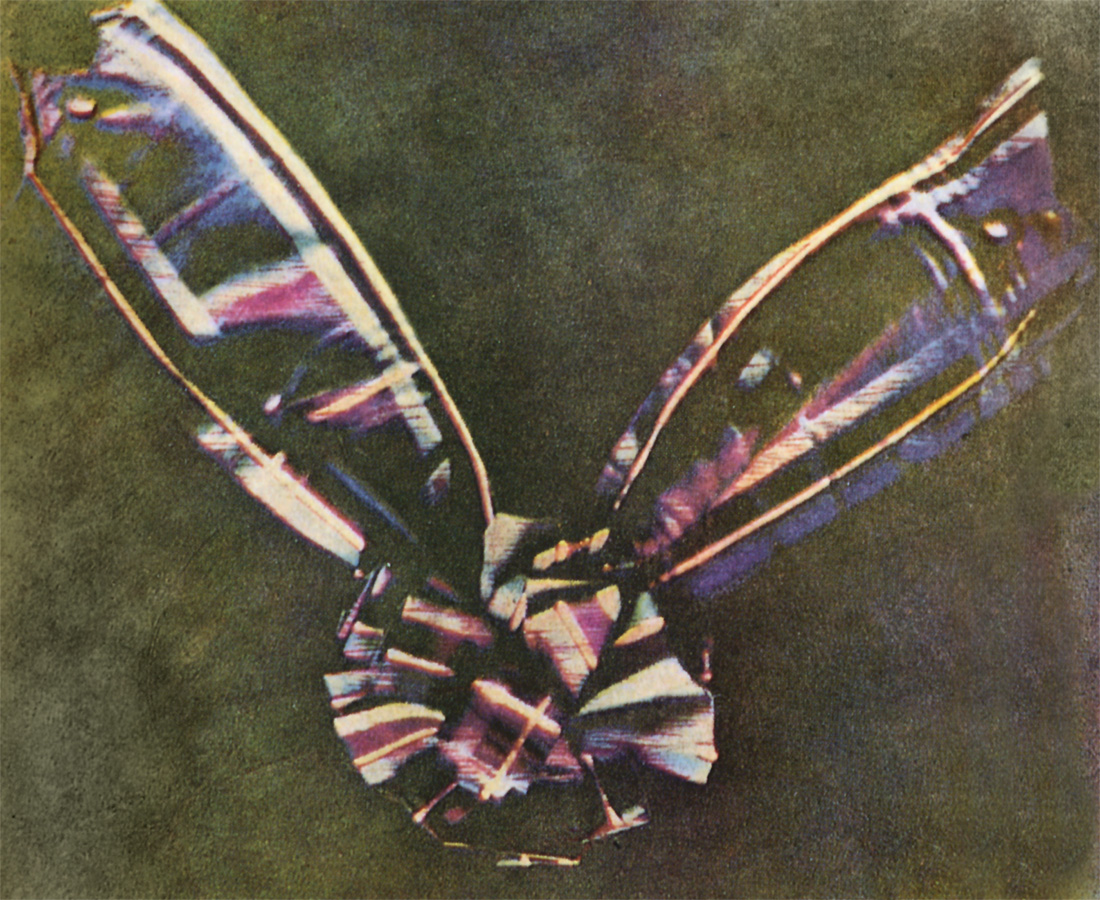
1st colour photograph by James Clerk Maxwell, 1961

And to our latest digital coloured portraits

These portraits are just example of how the of technology affected photography. Hopefully, the technology will keep on improving and continue to amaze us.


References:

Photography and Society

Among those topics discussed in the said website, I find it more important as to what we remember. You see, memories are the number one reason why we use photos. We capture every moment of our lives to cherish and to look back on our adventures whether it's good or bad. Also, we also take pictures to represent who we are, what we see and what we do. All those things are so important to us and most of them makes us think, those are the times and we wish that we should relive it again or sometimes think that we should change what happened in the past. It's really true that photography changes everything.


References:
http://www.google.ca/images?hl=en&safe=active&biw=1276&bih=781&gbv=2&tbs=isch%3A1&sa=1&q=happy+memories+photos&aq=f&aqi=&aql=&oq=&gs_rfai=

Wednesday, September 8, 2010

Introduction

My name is Kim Miranda. I'm currently taking up Accounting. I chose this course because I like photography. Though it is not really related to business, I try to make it as a hobby of mine. Personally, I like to take pictures of nature, something abstract and silhouhette. This picture is not mine, but I really like it's message which shows something about me so I get to share it. That's all for now.